What the incumbents look like —
and the whitespace they left open
Visual teardown of the competitors named in the Junior thesis (Phreesia, Access eForms, Epic, Meditech, Taylor Healthcare) plus the UX benchmarks the PRD cites (Jotform, Typeform, DocuSign). Screenshots are hot-linked from public sources; a few may not load if the source moves them.
1. Phreesia now owns the Access eForms playbook. Phreesia acquired Access eForms in Aug 2023 — "Access eForms Passport" is now sold by Phreesia and is the MaaS-compatible forms solution on Meditech's marketplace. The vendor the thesis says "won the market inside Meditech MaaS deals" is now part of the biggest intake incumbent. (Note: Interlace Health is the rebrand of FormFast, not Access — and Interlace's forms products lost MaaS compatibility.) Meditech is effectively bundling a competitor's product — a credible opening for an independent, white-label, cloud-native forms layer.
2. Phreesia is giving intake away free through Dec 2026 (paid from Jan 2027). Expect price-zero competition in ambulatory; Junior's wedge is acute care, partners, and white-label — not price alone.
3. Nobody has applied AI to the forms themselves. The incumbents' AI money is going to phones (Phreesia VoiceAI), ambient scribing (Epic, Meditech, Nuance/Abridge) and assistants (Epic's Emmie/Art/Penny). No one ships AI form generation, PDF→form conversion, adaptive intake, or AI translation of form variants. That is Junior's unclaimed whitespace.
1 · Phreesia
Positioning. "AI-enabled workflows" around the visit: scheduling, registration, forms/e-sign, eligibility, payments. Buyers: practice admins → health-system patient access; acute care via Access acquisition. ~$250–800+/mo estimates; free-through-2026 land grab.
UX model. Patient: no-app SMS/email link → stepper (demographics → insurance card capture → consents/e-sign → logic-driven questionnaires → copay). Staff: "Appointments Hub" — schedule-centric command center with intake status flags. Form building: template library customized largely by Phreesia's own implementation team — reviewers cite needing support for changes. That services bottleneck is the #1 friction Junior's self-serve designer attacks.
AI story. VoiceAI (Sep 2025): 24/7 conversational phone agent — scheduling, refills, referrals; writes documentation to EMRs. Nothing AI-native about forms/intake building.
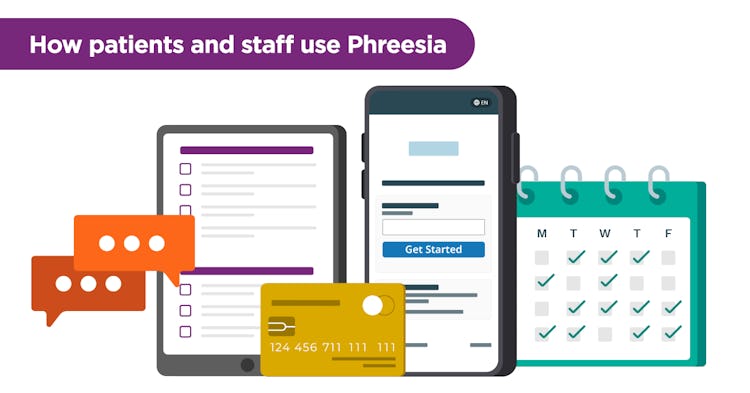

Phreesia keeps real product UI behind .mp4 demos; review-site galleries are the best static captures.
2 · Access eForms (Phreesia) & Interlace Health (ex-FormFast)
Access eForms Passport (now Phreesia): web forms portal launched from Meditech; HL7/ADT pre-population; packets at registration; signature pads/tablets/bedside; barcode archive back to the chart; downtime forms. MaaS-compatible: Yes. Cloud enabled: No. Function-first, dated UI; no public form-builder story.
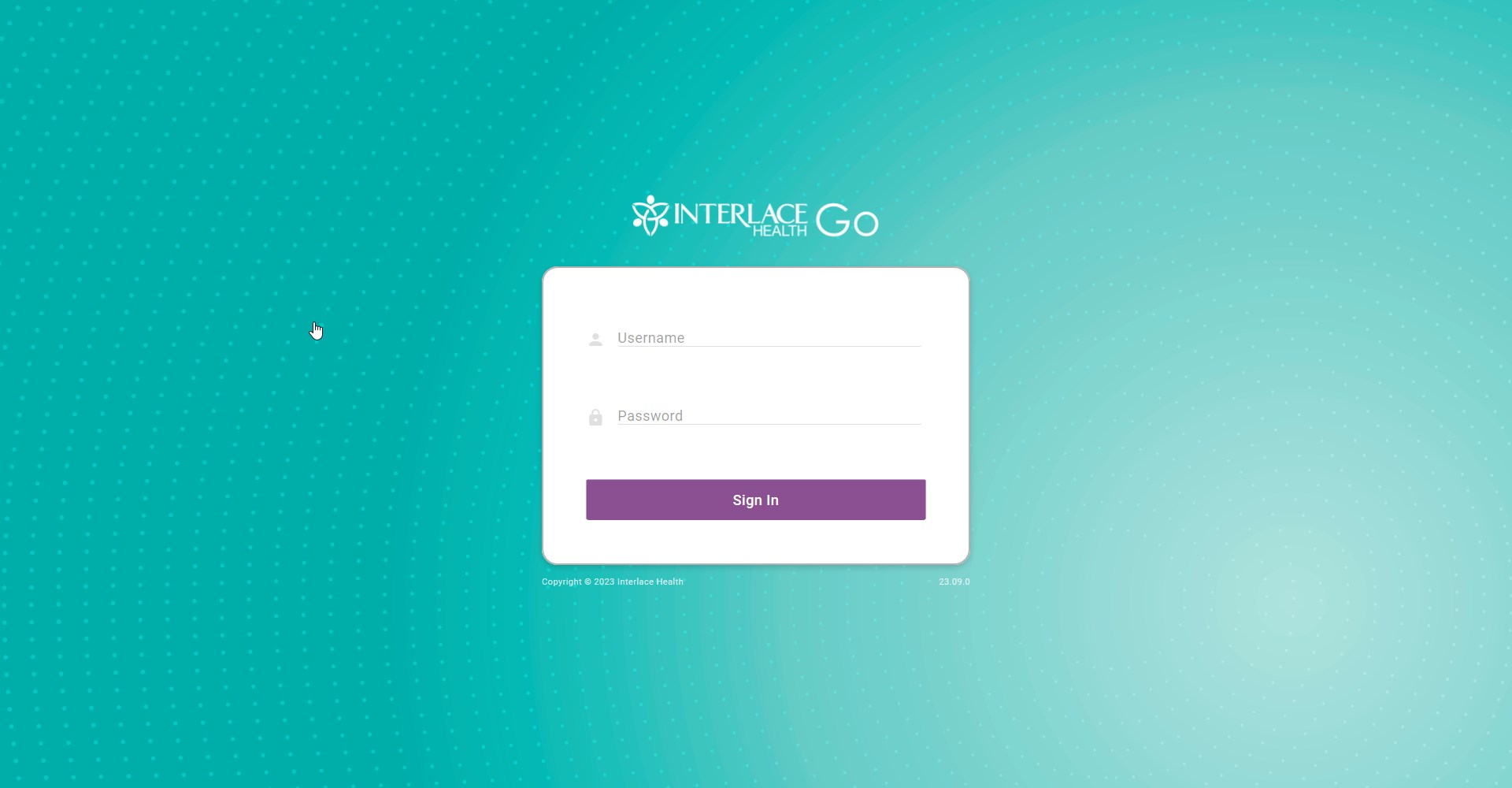
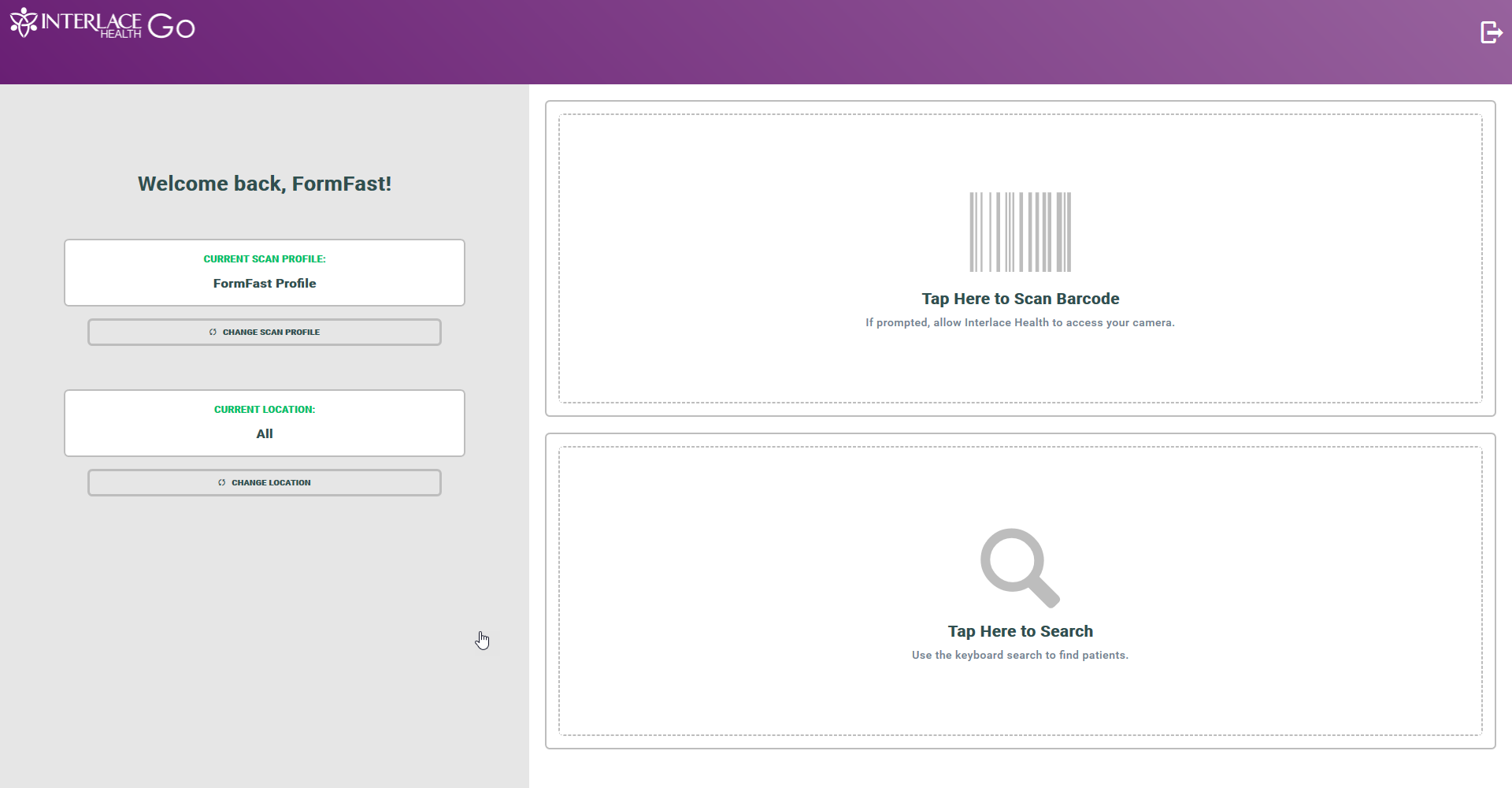
Interlace Health (formerly FormFast): Forms on Demand (central library, keyword search, favorites, barcode print-back), patient intake at home via Meditech Patient Connect/Artera, eConsent, EHR-downtime solutions. Reviewers: drag-drop builder exists but "antiquated styling," "complex multi-step upload," password changes via support ticket. No AI announcements — at MEDITECH Live 2025 their AI angle was consent forms for other people's ambient-AI tools.


3 · Epic
UX model. Patient: MyChart eCheck-in stepper ~7 days pre-visit (demographics → insurance photos → meds/allergies → tap-to-sign → questionnaires with progress bar → copay). Walk-ins: Welcome kiosks/tablets; staff assign a tablet by QR; front-desk DAR shows red-flag kiosk status columns. Builder: questionnaires/SmartForms built by Epic analysts in Hyperspace config — powerful, but a new form is an IT ticket, not a designer tool. That authoring gap is the classic third-party wedge.
AI story. Big: Emmie (patient assistant in MyChart), Art (clinician), Penny (rev cycle), Cosmos foundation models, ambient charting (2026). Still no AI form-builder or intake summarization.


Deeper flow documentation with embedded UI: Astera eCheck-In guide (PDF), UCSF Questionnaires guide (PDF), Methodist "Front Desk – Use Welcome" job aid (PDF) — linked in the research report.
4 · MEDITECH
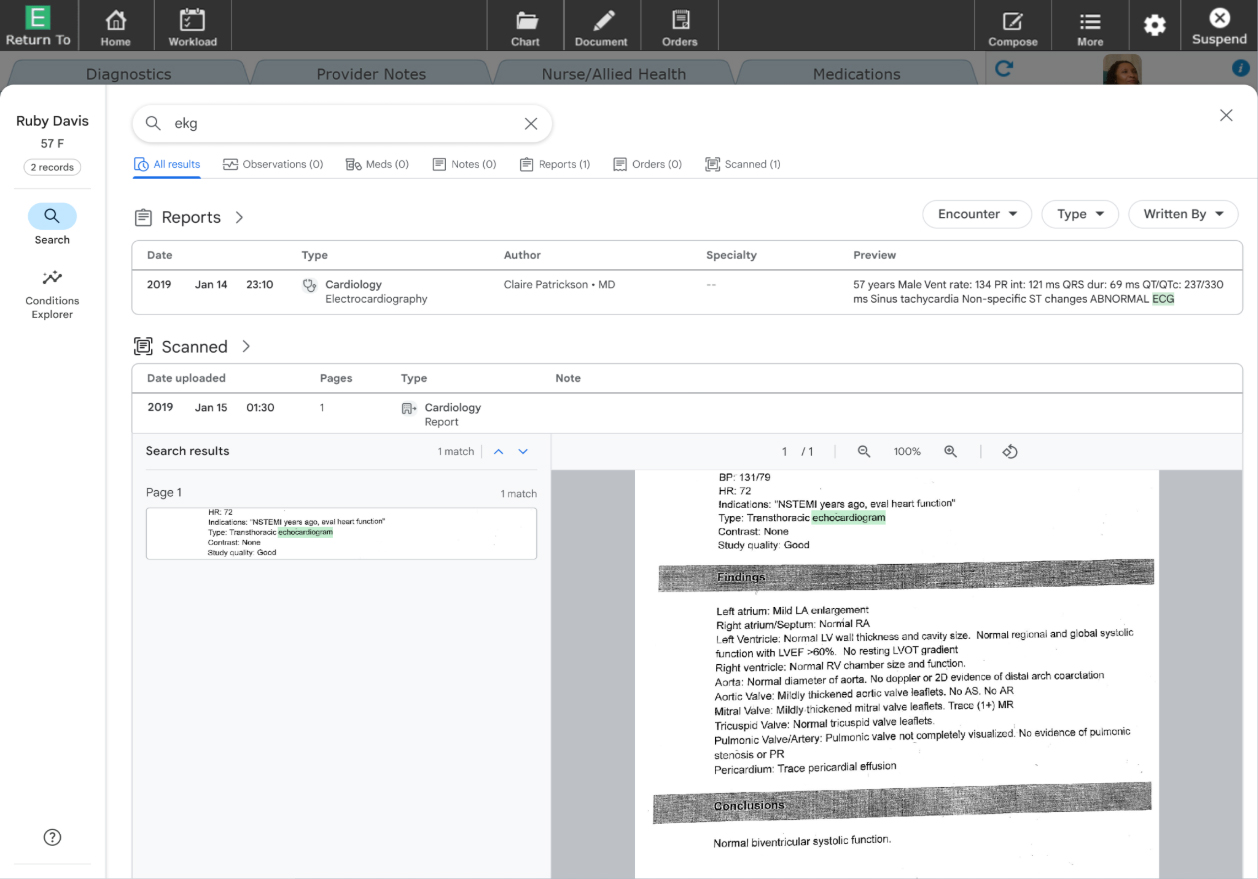
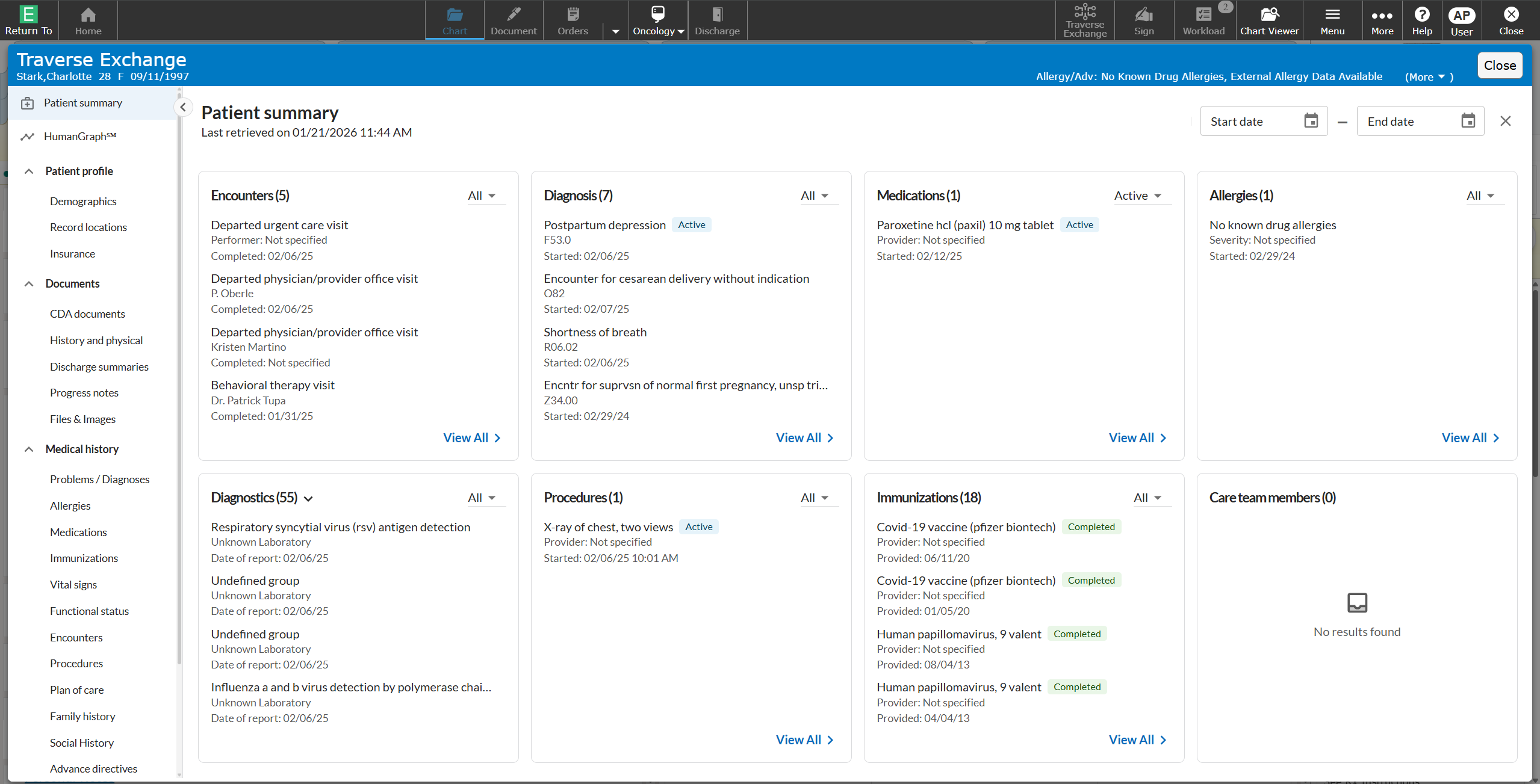
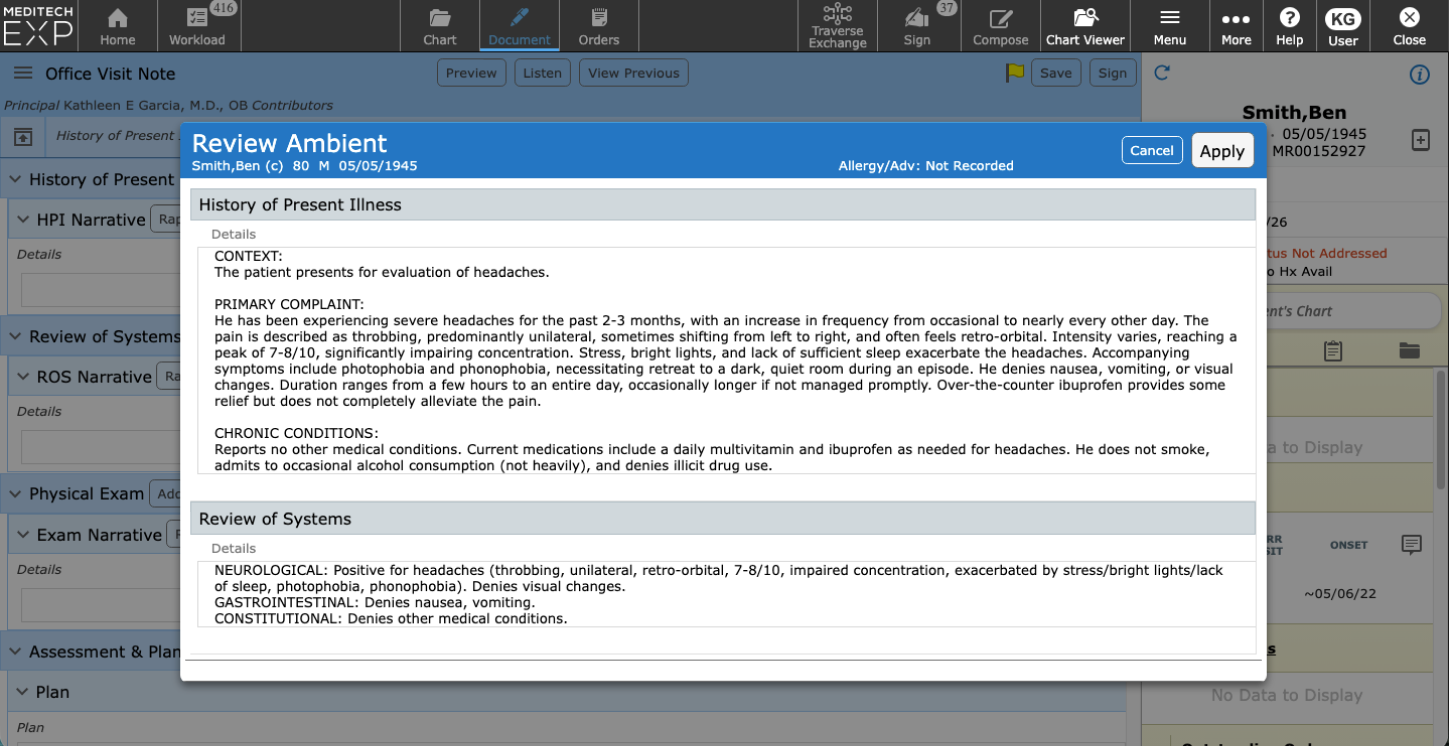
UX model. Clinician: clean white/green web UI, widget/tile navigation, Expanse Navigator AI pane, ambient documentation screens, BCA analytics dashboards. Registration is staff-keyed; patient self-service flows arrive via Patient Connect (Artera) links and the dated MHealth portal app. Forms/e-sign are delegated to Alliance partners — historically Access (now Phreesia) for MaaS. Meditech now bundles its biggest partner-channel competitor — Junior's white-label pitch writes itself.

5 · Taylor Healthcare
UX model. Clinician selects procedure → consent auto-assembles risks/benefits/alternatives → patient education → signature (Scriptel pads, tablets, or mobile phone via SMS/QR). SMARTworks Forms on Demand = print-on-demand + barcodes. Content-library-plus-services model; no self-serve builder; visually the most opaque competitor (brochure PDFs only).


6 · Jotform — the discoverability & AI-agent bar
What to copy. Template catalog: search + type taxonomy + industry taxonomy + trending rows; every card has live Preview + one-click Use Template. Builder: Build/Settings/Publish three-stage tabs; Classic vs Card (one-question) render modes from one form definition. AI Agents (Feb 2025): any form becomes a conversational agent that guides fill, answers mid-fill questions, validates in real time — deployable as web chat, kiosk, SMS, WhatsApp, and phone with voice by default. This is the closest shipping product to Junior's "form-as-conversation" thesis — for generic forms, without EHR integration.


7 · Typeform — the fill-experience bar
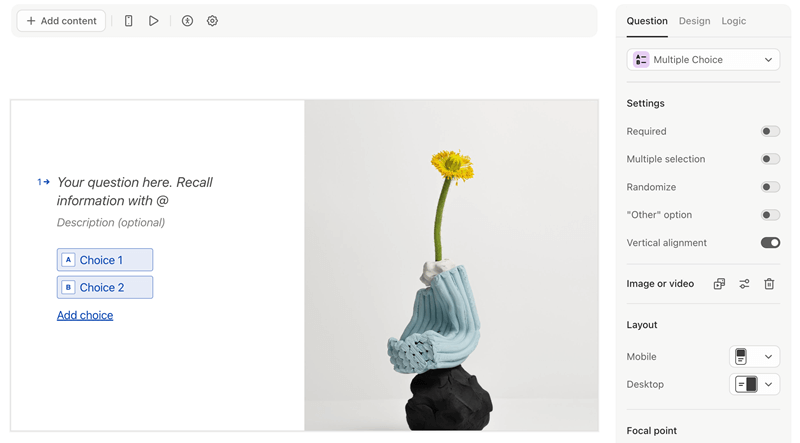
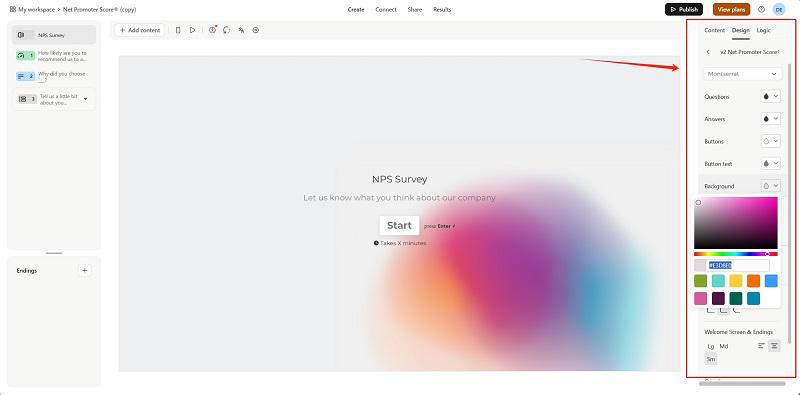
What to copy. Fill: single focused question, huge display type, keyboard-first (Enter, A/B/C), slide transitions, progress indicator, answer piping ("Thanks Maria — who is Jacob's pediatrician?"), per-question drop-off analytics. AI: Creator AI generates forms optimized for completion ("trained on 1B+ responses"); Clarify/FAQ-with-AI answers respondent questions mid-fill — directly transplantable to "why do you need my SSN?" moments in patient intake. Voice & video answer blocks are shipping. Their aesthetic (whitespace, one accent color, motion) is why they're cited as beautiful; budget for that craft in Junior's Viewer.

8 · DocuSign — the signing-ceremony bar
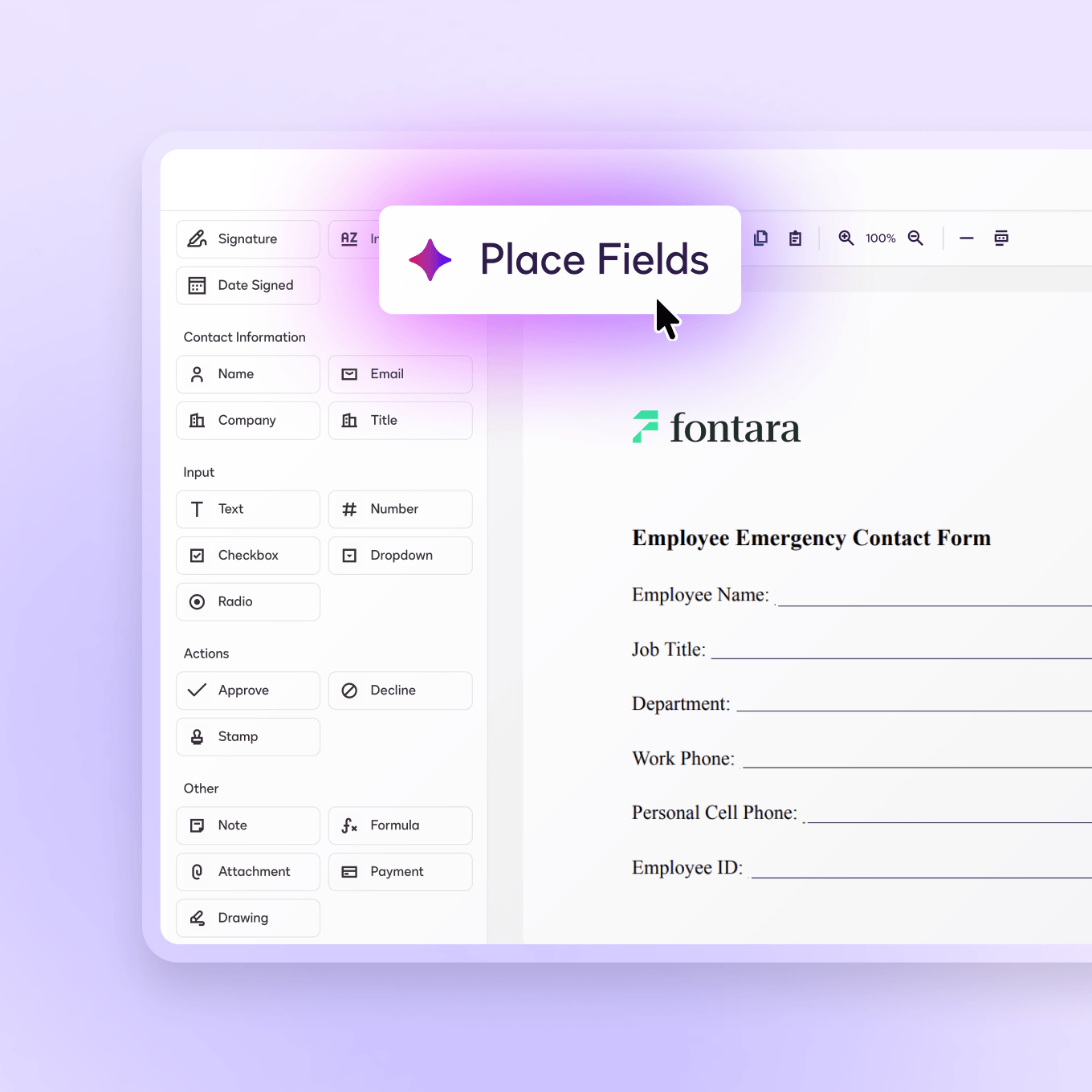
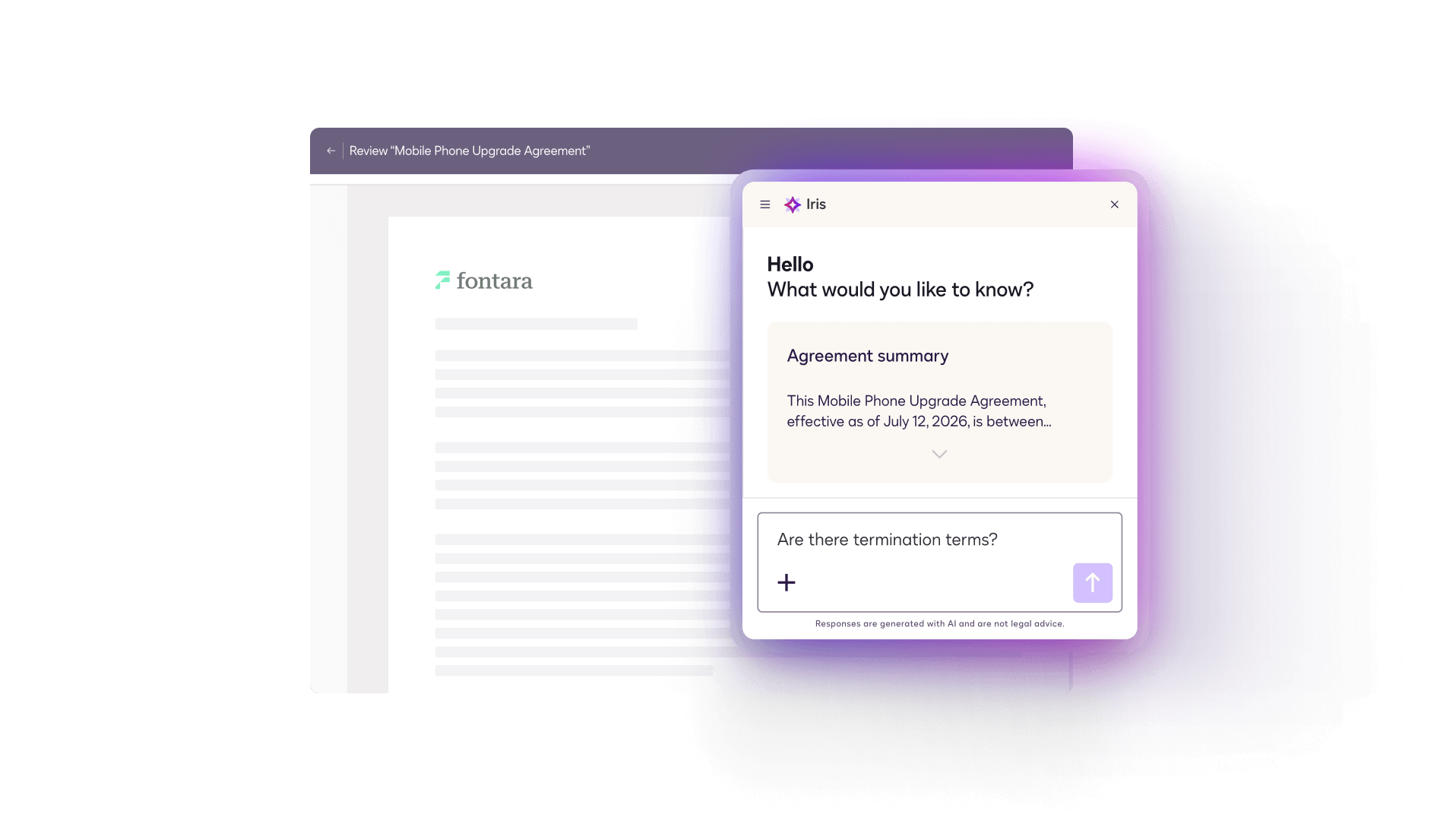
What to copy. START tag → yellow field tags → persistent "Next" auto-scroll → FINISH enabled only when complete. Adopt-signature once (type/draw/photo), then one-tap apply everywhere — a deliberate moment of gravity followed by frictionless repetition; exactly matches Junior's §10.6 "sign once, click-apply through the rest of the packet." Focused View strips all vendor chrome for embedded signing (configurable button position/label/colors) — the model for Junior white-labeled in an EHR. Caution from their own community: guided jumping needs a "review whole document" escape hatch. AI: signer-facing agreement summaries + instant Q&A before signing; AI Web Forms converts PDFs to interactive forms — validation of Junior's PDF-import path.

9 · The fast followers: Fillout, Feathery, Formstack
Fillout — AI generates fields + logic + layout from one prompt ("least cleanup" in third-party tests); PDF→form conversion; login-gated forms where respondents edit prior submissions. Feathery — the "forms platform for a regulated vertical" playbook (wealth/insurance) Junior is running for healthcare: HIPAA/SOC2 from day one, Robin AI builds whole workflows from natural language, white-label embeddable editor. Formstack — Streamline prefills EHR data into intake; field-level PHI permissions; no per-envelope signing fees as a pricing wedge vs DocuSign. These prove every element of Junior's plan is individually viable — nobody has combined them inside the EHR.
10 · Patterns to steal
11 · The whitespace map
| Gap | Evidence | Junior's move |
|---|---|---|
| AI on forms themselves | All incumbent AI targets phones/scribing/assistants; zero AI form-gen, PDF→form, adaptive intake, AI translation | Design-by-prompt, AI import, AI language variants — the §15 subsystem, front and center |
| Self-serve form builder | Epic = analyst ticket; Phreesia = vendor services; Interlace = "antiquated"; Taylor = content library | Figma/Typeform-grade designer with model prefill mapping |
| SMART on FHIR embedding | Incumbents integrate via HL7/ADT, printing, barcodes, proprietary APIs | Standards-native in-EHR experience that travels across Epic/Meditech/Oracle at once |
| Meditech partner slot destabilized | Phreesia owns Access; Interlace lost MaaS forms compatibility | Independent white-label cloud-native forms layer pitch — to Meditech and every EHR wary of Phreesia |
| Elderly / accessibility friction | Recurring Phreesia complaint: long complex flows | Adaptive length, large-type mode, voice fill, caregiver proxy, real multi-language |
| Pricing transparency | Everyone is quote-only; auto-renew grievances; Phreesia free-thru-2026 | Published simple pricing; compete in acute + white-label, not ambulatory price war |
| Review-site vacuum (acute forms) | Access/Interlace/Taylor have almost no G2/Capterra presence | Modest early review generation makes Junior look like the category default |
Sources: vendor sites and press (phreesia.com, interlacehealth.com, accessefm.com, ehr.meditech.com, taylor.com, jotform.com, typeform.com, docusign.com, fillout.com, feathery.io, formstack.com), EHR marketplace listings, Google Play / Microsoft Store listings, G2 / Capterra / GetApp / TrustRadius reviews, Becker's, Healthcare IT Today, CNBC. Full link list in the accompanying research report.